By, Johanna Stieg, LCSW
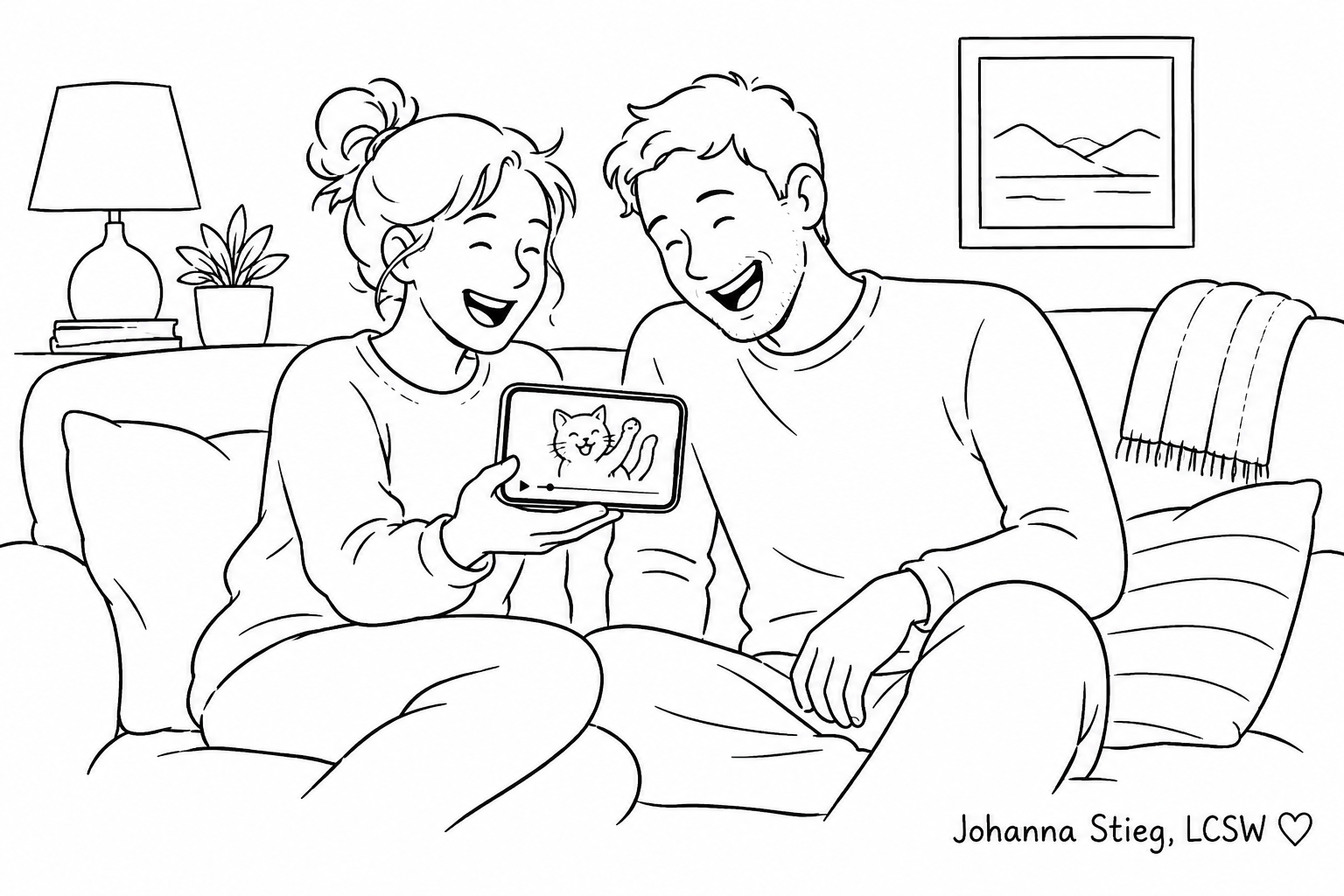
Your partner shows you a funny meme. You barely glance up.
They tell you about a coworker you’ve never met. You respond with, “Uh huh.”
They reach for your hand while you’re watching TV, but you’re distracted by your phone.
These moments seem insignificant. They’re not.
Relationships rarely fall apart because of one catastrophic argument. More often, they erode through thousands of tiny moments when partners stop reaching for each other—or stop noticing when the other person reaches first.
These small moments are what relationship researchers John and Julie Gottman call bids for connection, and they’re one of the first concepts I introduce to couples in therapy. If someone walks away from our work remembering just one idea, I hope it’s this one.
What is a bid for connection?
A bid is any attempt—big or small—to connect with your partner.
Sometimes bids are obvious:
“Can we go out to dinner this weekend?”
“Can I have a hug?”
“Will you sit with me?”
Other times they’re much more subtle:
“Look at this sunset.”
“Guess what happened at work today.”
“Listen to this song.”
“Did you see Bobby finally got a new dog?”
Most bids aren’t really about the sunset, the dog, or the story from work.
They’re asking a much deeper question:
“Will you meet me here?”
Every response sends a message back.
“I see you.”
“I’m interested.”
“I like sharing life with you.”
Or…
“You’re on your own in this moment.”
Over time, these seemingly ordinary exchanges shape the trust, closeness, and emotional safety that couples build together.
How we respond matters
The Gottmans describe three common ways partners respond to bids.
Turning toward
This is choosing to engage with your partner’s attempt to connect.
Partner A:
“Did you see Bobby finally got a new dog? She’s adorable!”
Partner B:
“I did! He must be so happy after losing his last dog. What kind is she? We should meet her sometime.”
Notice that Partner B isn’t responding because the dog is inherently fascinating. They’re responding because their partner is.
Turning away
Partner A:
“Did you see Bobby got a new dog?”
Partner B (without looking up from their phone):
“Mm-hmm.”
No conflict. No criticism. Just a missed opportunity for connection.
Turning against
Partner A:
“Did you see Bobby got a new dog?”
Partner B:
“Can we not talk about random people from Facebook?”
This response doesn’t just miss the bid—it rejects it.
It’s not really about the dog
That’s the part people often miss.
The conversation isn’t actually about Bobby’s dog.
It’s about your partner saying:
“I want to share something with you.”
“I thought you’d enjoy this.”
“Can we have a moment together?”
When bids are consistently ignored or rejected, partners often begin bidding less. Over time, this can create a slow drift toward loneliness and disconnection—even when love is still very much present.
Conversely, when bids are noticed and met with warmth and curiosity, they create a positive cycle. Partners feel safer reaching for one another, which naturally leads to even more connection.
Bids happen everywhere
With the rise of social media, you may have heard the term “pebbling.” It describes sending someone a funny meme, TikTok, Instagram Reel, or article simply because it reminded you of them.
Those are bids too.
They’re quietly saying:
“I was thinking about you.”
So are:
Sending a text just to say hello.
Offering a hug after work.
Making your partner a cup of coffee.
Inviting them on a walk.
Asking about their day—and listening without distraction.
Reaching for their hand.
Initiating intimacy.
Sharing something that made you laugh.
The forms change, but the message is always the same:
“I want to connect with you.”
You don’t have to do this perfectly
No one turns toward every bid.
We’re tired. We’re distracted. We’re parenting, working, answering emails, and trying to keep up with daily life.
The goal isn’t perfection.
The goal is creating a relationship where turning toward each other becomes the norm rather than the exception.
A simple exercise to try this week
For the next few days, simply notice.
Ask yourself:
How did I bid for connection today?
How did my partner bid?
Did I notice their bid?
How did I respond?
Awareness alone often changes behavior.
Many couples are surprised to realize just how often they’re reaching for one another—and how often those opportunities are unintentionally missed.
Small moments create strong relationships
One thing I frequently see in couples therapy is that partners rarely stop loving each other overnight. More often, they’ve fallen out of the habit of noticing and responding to one another’s bids.
Sometimes I even encourage couples to set reminders on their phones:
“Compliment your partner.”
“Ask about their day without distractions.”
“Offer a hug before bed.”
At first it can feel awkward or overly intentional. That’s okay.
Healthy habits often begin with conscious effort before they become second nature.
In therapy, we work together to map the interaction patterns that keep couples stuck and identify the moments where connection gets lost. Once you learn to recognize those moments, even small shifts—looking up from your phone, asking one more question, reaching for your partner’s hand—can interrupt old cycles and begin rebuilding closeness.
Those tiny moments may seem insignificant on their own, but together they become the foundation of trust, friendship, and lasting connection.
If you and your partner feel like you’ve been missing each other lately, couples therapy can help you recognize these moments, understand the patterns beneath them, and build new habits that bring you back toward one another.